Lawn care guide
How Short Should You Cut Your Grass? Mowing Height Guide
Cutting height by grass type, season and shade, and why scalping backfires.
- 4 min read
- Middle Tennessee
- Free estimates
Mowing height is the easiest lawn-care lever to pull and one of the most powerful. Cut too short and you stress the grass, dry out the soil and invite weeds. Cut at the right height and the lawn shades its own roots and crowds out weeds.
Typical heights by grass
- Tall fescue: three to four inches.
- Bermuda: one to two inches.
- Zoysia: one to two and a half inches.
Raise the deck in summer
In July and August, mow fescue at the top of its range. The extra leaf area shades the soil, retains moisture and helps the grass tolerate heat.
Raise it in shade
Shaded grass has less light to work with, so give it more leaf. Add half an inch to an inch in shaded areas.
New seed and new sod
Wait until seedlings reach a safe height, usually when they are about four inches tall, and then mow at a high setting. New sod can be mowed once it is rooted, usually in two to three weeks.
Why scalping backfires
A scalped lawn looks tidy for a day or two and then thins out. Weeds move into the bare spots and the soil bakes in summer. Taller grass is almost always healthier.
Keep blades sharp
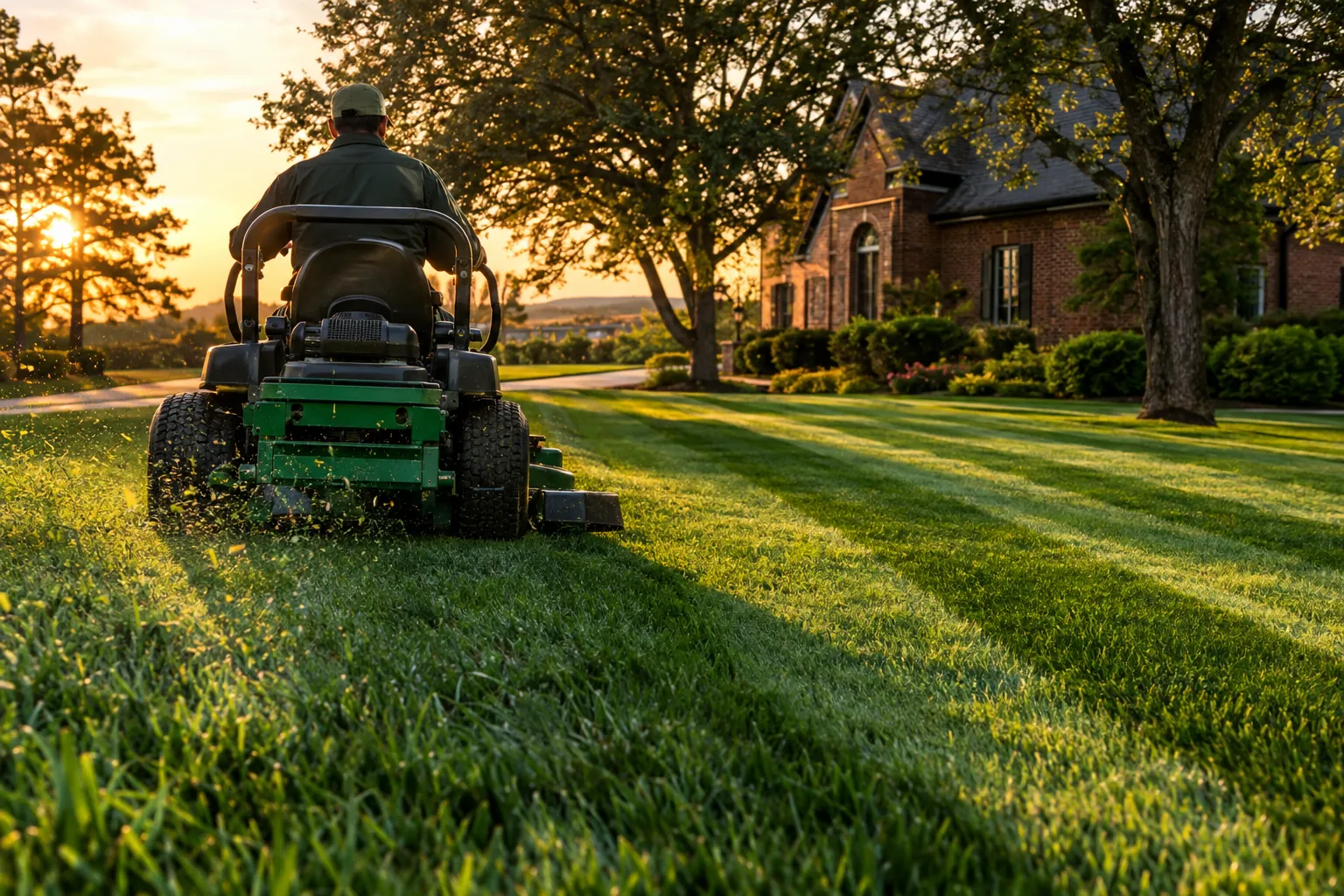
A dull blade tears grass instead of cutting it, leaving brown, frayed tips. Sharpen blades at least once or twice a season. Professional crews keep spare blades on the truck and sharpen on a regular schedule, which is one reason a professional cut looks cleaner.
Trimming and edging
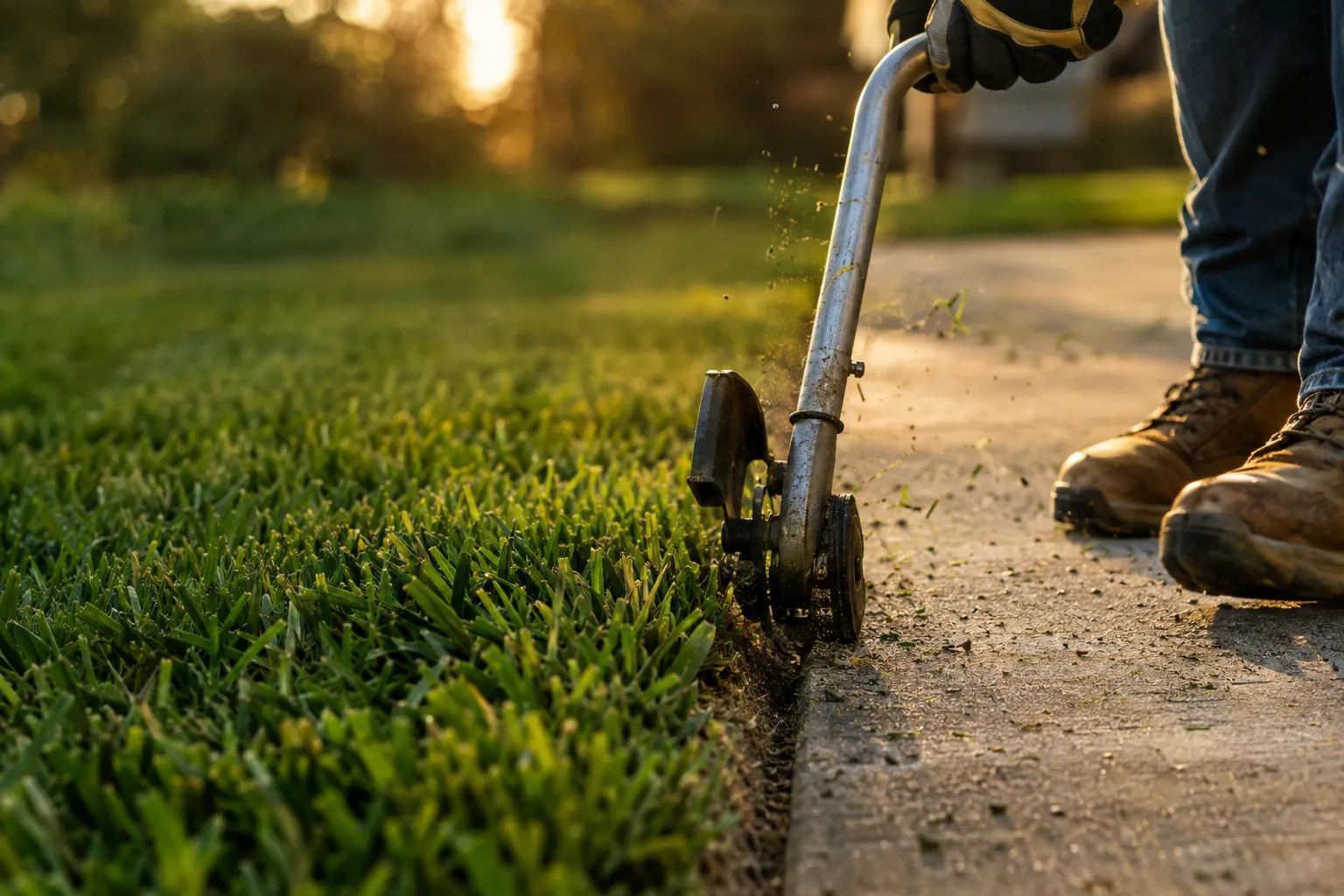
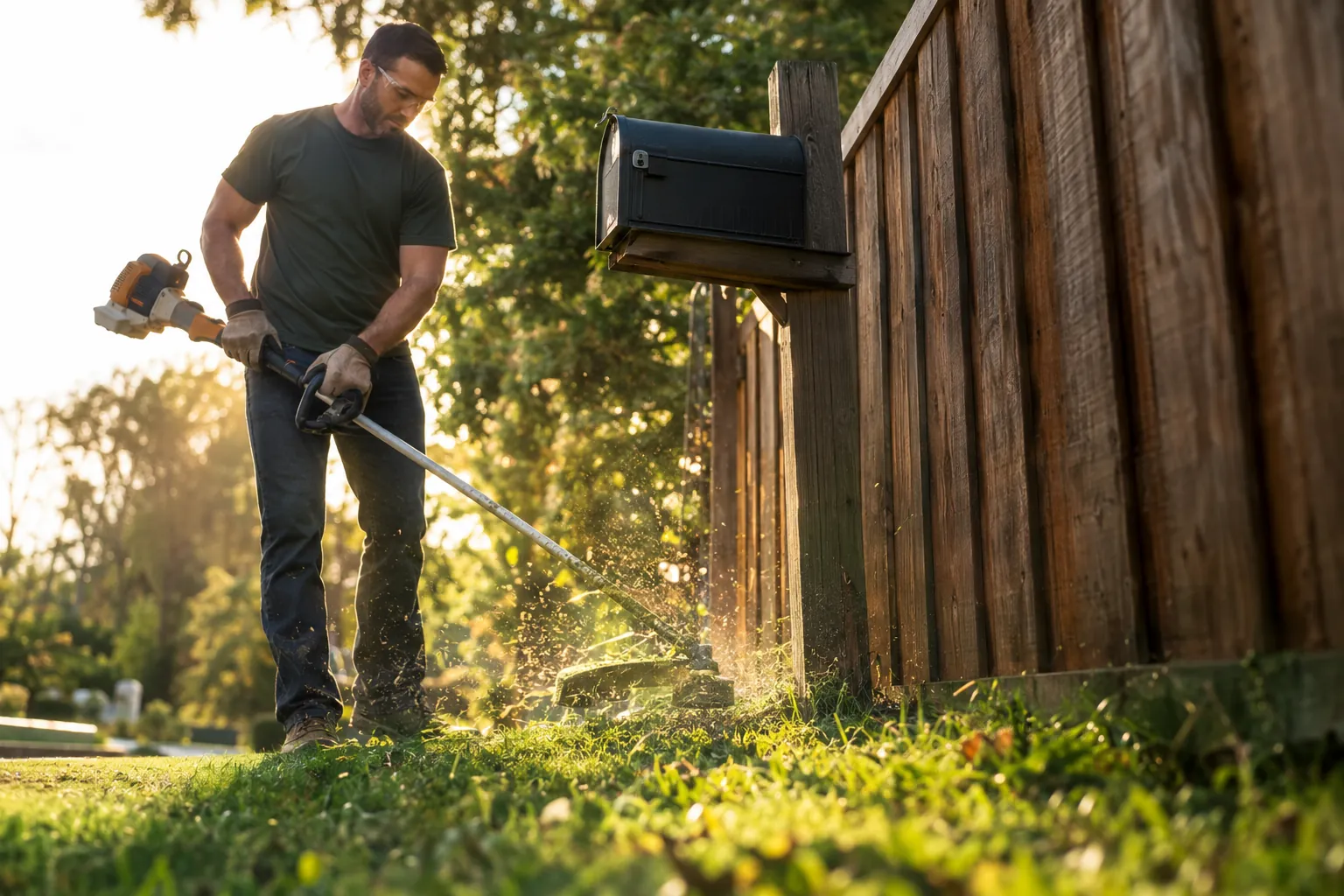
The mower height is only part of the finished look. Edging and string trimming finish the job.
Services that go with this guide
Want us to handle it?
Free estimates across Nashville and Middle Tennessee.