Lawn care guide
Fall Lawn Care in Middle Tennessee: What Matters Most
Why fall is the most important lawn season for fescue, and exactly what to do.
- 5 min read
- Middle Tennessee
- Free estimates
If you only do one season of lawn care well, make it fall. For tall fescue, the most common lawn grass in Middle Tennessee, fall is when the grass puts down roots, recovers from summer and builds the density that will crowd out weeds next year.
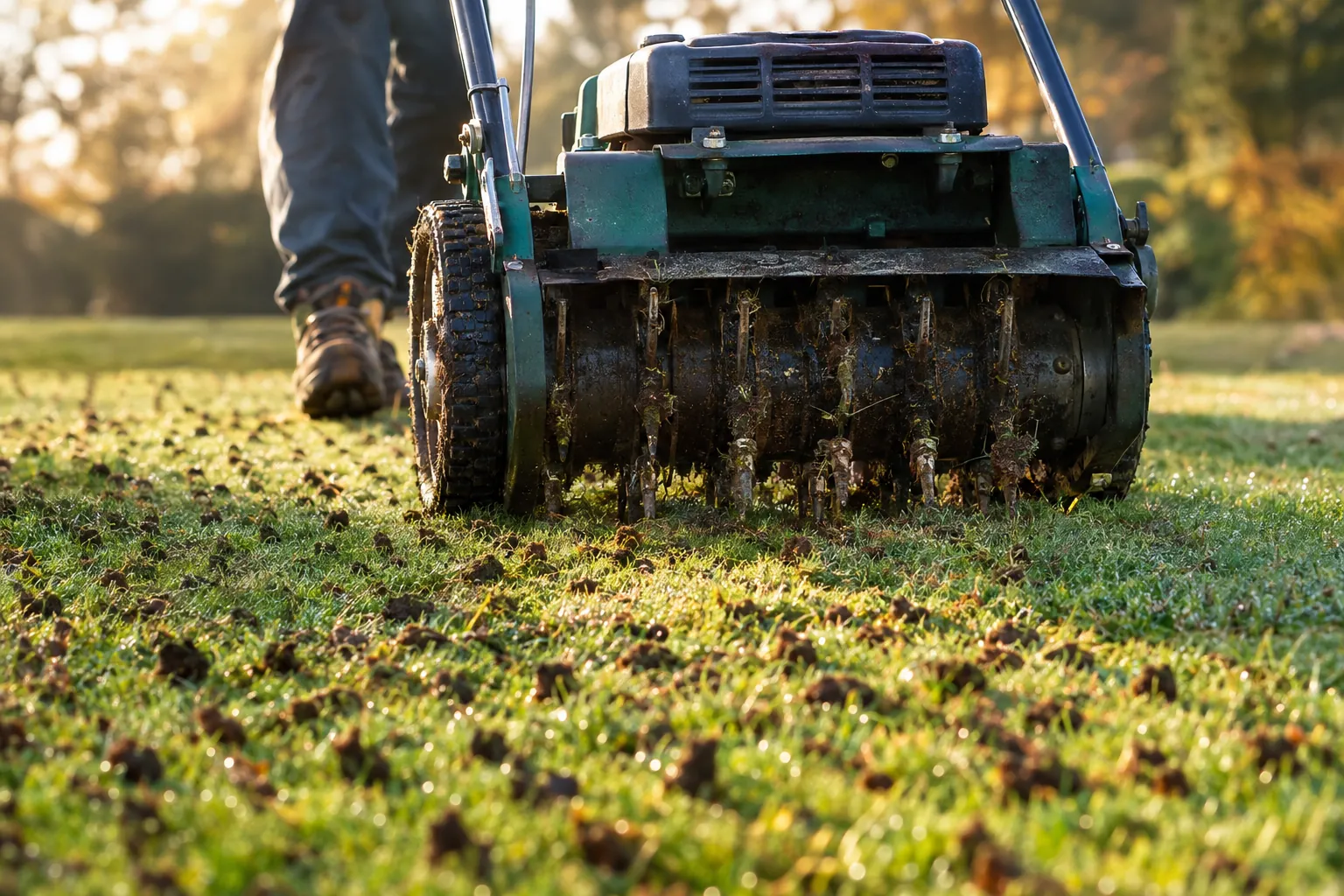
Step 1: Aerate
Our clay soils compact easily. Core aeration pulls small plugs of soil, opens channels for air, water and nutrients and prepares the lawn for seed. Early September through mid-October is the best window. See core aeration.
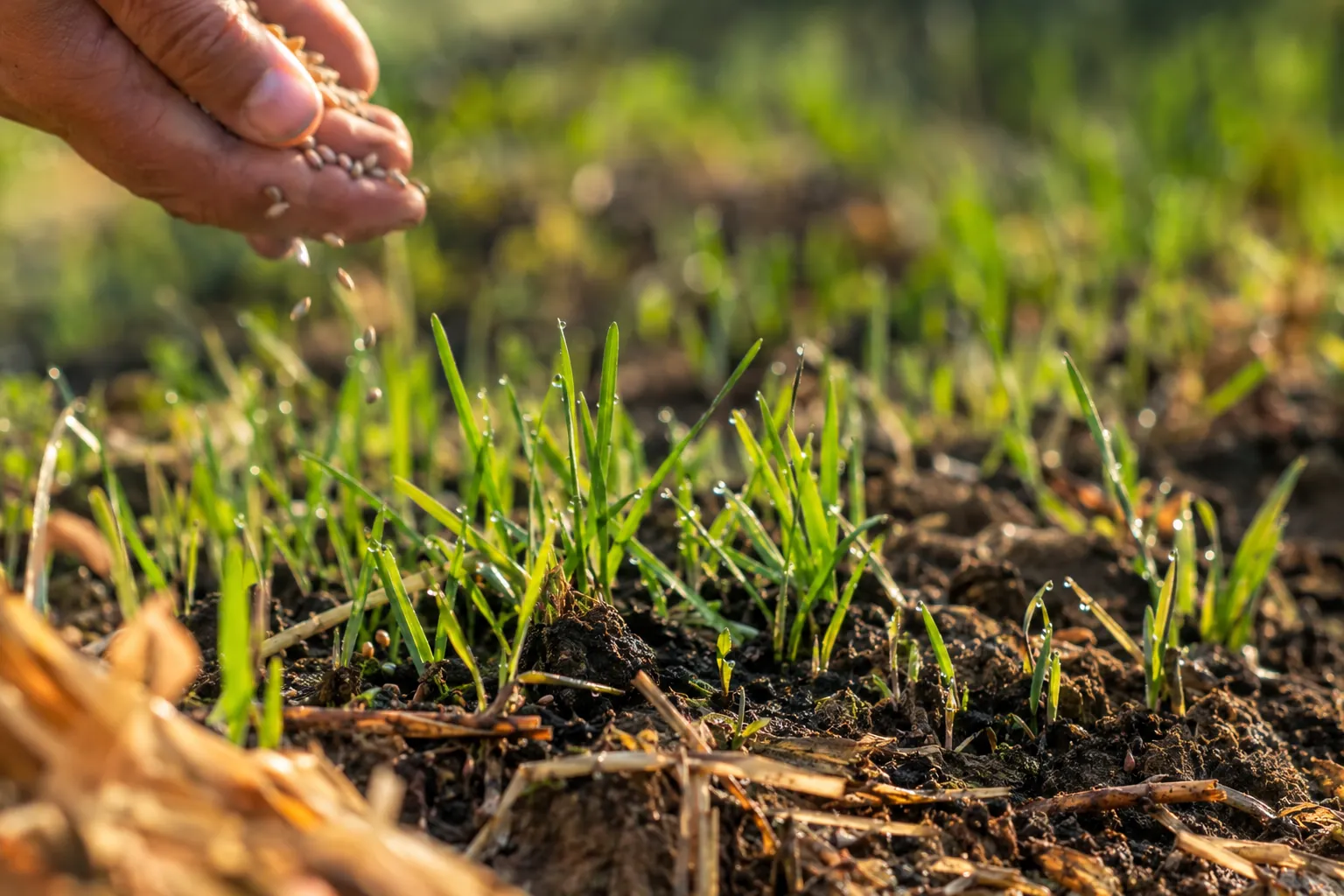
Step 2: Overseed
Spread fresh seed over the aerated lawn to thicken thin areas and introduce improved varieties. Warm soil and cool nights help seed germinate quickly. Keep the soil surface moist until seedlings are established. See overseeding.
Step 3: Feed
Fall fertilizer feeds the roots rather than top growth, which is exactly what fescue needs heading into winter. Apply in September and again in November.
Step 4: Control weeds
Many broadleaf weeds are easier to control in fall because they are actively moving nutrients to their roots. Treat in early to mid-fall, before the first hard frost.
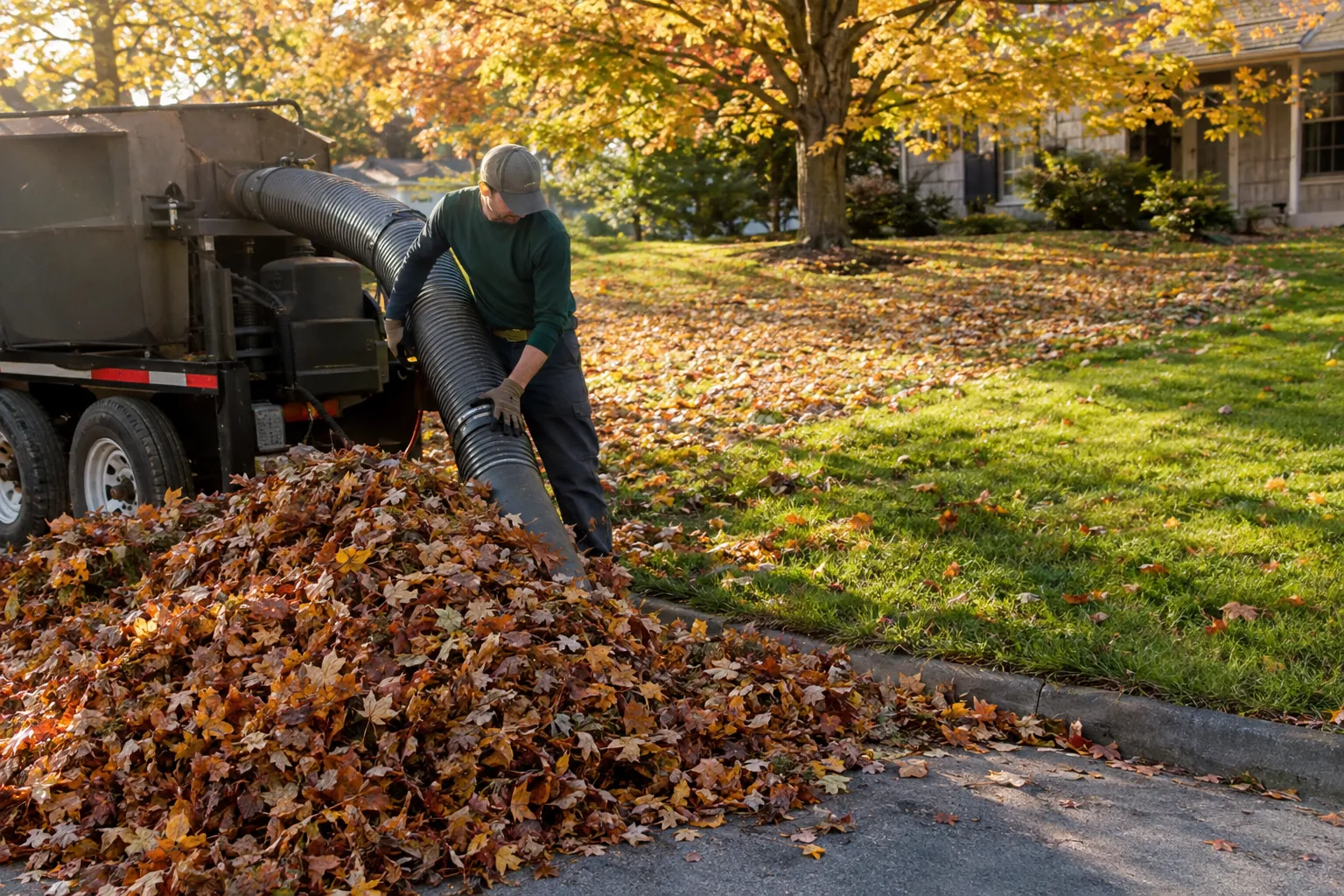
Step 5: Manage leaves
A heavy blanket of leaves smothers the lawn and invites disease. Keep leaves off the turf with regular blowing or removal, especially if you have mature oaks and maples.
Step 6: Mow until growth stops
Keep mowing weekly at three to four inches through the end of the season. Lower the height slightly on the last cut, but avoid scalping.
Step 7: Clean up
A fall cleanup clears the beds and puts the property to sleep tidy, so you wake up to a better spring.
Services that go with this guide
Want us to handle it?
Free estimates across Nashville and Middle Tennessee.